
Panasonic Lumix S1IIe vs S5II: Is it worth to upgrade?
Yes, if you can afford it. Let me explain. The Lumix S1IIe is a major upgrade to the Lumix S5II and despite technically having the same 24.2MP Full-Frame BSI CMOS sensor (the S1IIE sensor has been refined – improvements in dynamic range and readout speed), it has an updated Venus Engine processor, which significantly enhances its capabilities in all areas. Along with the S1II line new bigger body, this new software/hardware combination has starched the limits of what Lumix can extract out of this older sensor, giving us 4k 60p 2.34:1 (Cinemascope mode), 5.1K Open gate at 60p, internal ProRes RAW, better monitoring (false color, vectorscope), cropless EIS, UVC webcam implementation, wireless TC, Capture One + Lumix Flow integration, added HEIF photo format, and CineLike A2 color profile.
The new line of S1II bodies gives us a substantially better higher-res EVF (5.76 MD vs. 3.68 MD), a more versatile 5-axis screen, a deeper grip, tougher/freeze-rated body, longer-life shutter with power-off closure, a CFexpress slot, front tally light, photo/video/S&Q switch, and the ability to lock the shooting/drive mode dials.
The performance improvements are also notable; better IBIS implementation (not that the IBIS in the S5II is bad), with focus on center objects and the option of cropless image stabilization, refined autofocus with added Urban Sports mode, and a better hand held 96MP high-res mode. You can also have the 32-bit float audio option (via the XLR adapter) and paid ARRI LogC3 option, which are both not available in the S5II.
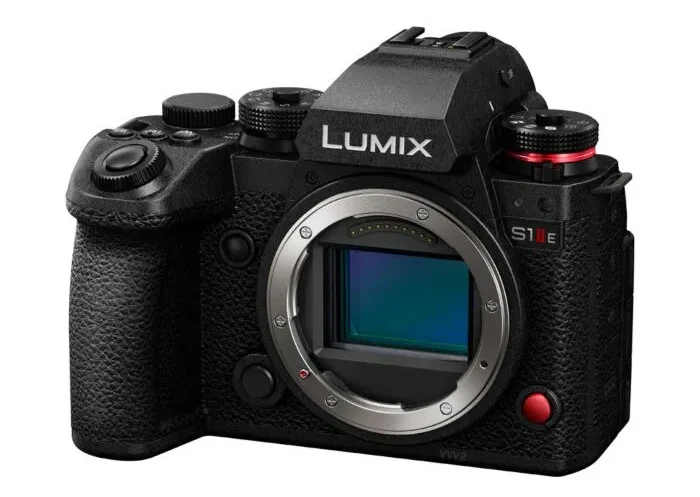
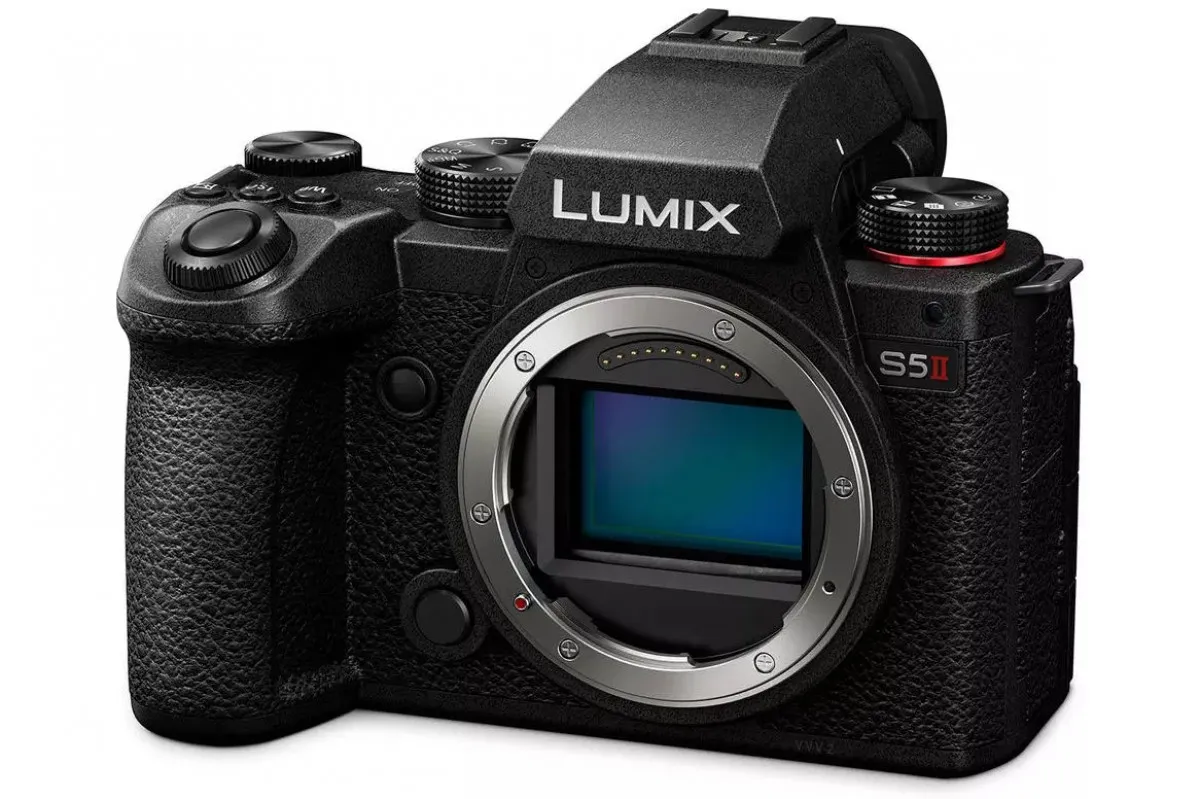
I have not tested the S1IIE, but I have researched it extensively, watched all the user videos I could find on YouTube (even foreign ones) – which are very few in comparison to the S1II/R videos – and have evaluated it for a potential future acquisition. Below is an extensive comparison between the two cameras, taking into account also the firmware upgrades both cameras have received:
| Feature | Lumix S1IIe | Lumix S5II |
|---|---|---|
| 📷 Sensor & Image Processing | ||
| Sensor type | 24.2MP Full-Frame BSI CMOS (no OLPF) | 24.2MP Full-Frame BSI CMOS (no OLPF) |
| Sensor size | 35.8 × 23.8 mm | 35.6 × 23.8 mm |
| Sensor generation | Refined BSI CMOS — improved dynamic range & readout speed | Standard BSI CMOS (2023 generation) |
| Image processor | Updated Venus Engine — significantly faster pipeline | Venus Engine with “L2 technology” |
| Native / Extended ISO | 100–51,200 / 50–204,800 | 100–51,200 / 50–204,800 |
| Dual Native ISO | Yes | Yes |
| High-Res mode (96MP) | Supports handheld capture at launch | Handheld mode added via FW 2.2 (Oct 2023) |
| Focus Stacking | Available at launch — speed improved in FW 1.2 | Not available |
| LEICA Monochrome Photo Style | Yes — at launch | Added FW 3.1 (Oct 2024) |
| 🎯 Autofocus | ||
| AF system | Phase Hybrid AF (779 PDAF + 315 CDAF) | Phase Hybrid AF (779 PDAF + 315 CDAF) |
| Human / Animal detection | At launch — improved AI algorithms | At launch (2023) |
| Animal eye detection | At launch | Added FW 3.0 (Apr 2024) |
| Vehicle detection (cars, motorcycles) | At launch | Added FW 3.0 (Apr 2024) |
| Vehicle detection (trains, airplanes) | At launch | Added FW 3.2 (Jan 2025) |
| Urban Sports AF mode | Added FW 1.1 (Jun 2025) | Not available |
| Auto-recognition AF frames | Added FW 1.2 (Nov 2025) | Not available |
| Rectangular AF frame (human eye) | Added FW 1.2 (Nov 2025) | Not available |
| AF-Point Scope (magnified AF check) | At launch | Added FW 2.2 (Oct 2023) |
| AF tracking behavior | Stays locked when no subject detected — no erratic fallback | Falls back to generic area tracking when subject lost |
| MF Assist magnification | Up to 20× at launch | Up to 20× added FW 2.2 (Oct 2023) |
| AF frame color selection | 10 colors — added FW 1.1 | Not available |
| 🎚 Image Stabilization | ||
| IBIS (body only) | 8.0 stops — at launch | 5.0 stops |
| Dual I.S. 2 (with compatible lens) | 7.0 stops | 6.5 stops |
| Cropless Electronic I.S. (video) | No field-of-view penalty — at launch | Standard E.I.S. with crop; HIGH mode added FW 3.0 |
| Active I.S. (walking video) | Yes | Yes |
| Perspective distortion correction | At launch | Added FW 3.0 (Apr 2024) |
| 🎬 Video Capabilities | ||
| 6K Open Gate (3:2) / 5.9K (16:9) | Up to 30p — at launch | Up to 30p — at launch |
| C4K / 4K up to 60p — 4:2:2 10-bit | At launch | At launch |
| Full HD up to 120p | At launch | At launch |
| 5.1K Open Gate up to 60p | At launch | 30p only — no 60p in Open Gate above 4K |
| Internal ProRes RAW / RAW HQ | Yes — 5.8K to CFexpress Type B | Not available |
| Internal Apple ProRes 422 | Yes — to CFexpress Type B | Not available |
| External RAW output via HDMI (ProRes RAW / BRAW) | At launch | Requires DMW-SFU2 upgrade key — added FW 2.0 (Jun 2023) |
| Proxy recording (simultaneous) | At launch — also during HDMI RAW output (FW 1.1) | Added FW 3.0 (Apr 2024) |
| MP4 (Lite) recording | Added FW 1.2 (Nov 2025) — 3.8K Open Gate, 50Mbps | Added FW 3.2 (Jan 2025) — 3840×2560, ~41% smaller files |
| 2.4:1 Cinemascope aspect ratio | Yes | Not available |
| ARRI LogC3 | Optional upgrade key — added FW 1.1 (Jun 2025) | Not available |
| V-Log / V-Gamut (pre-installed) | 14+ stops — at launch | 14+ stops — at launch |
| Real-Time LUT (live view) | Yes | Yes |
| False color overlay | At launch — bug fixed in FW 1.2 | Not available |
| Waveform monitor | Yes | Yes |
| Vectorscope | Yes | Not available |
| Multiple frame markers (up to 3) | At launch (17 aspect ratio options — expanded FW 1.1); Lumix Flow frame display FW 1.2 | Added FW 3.2 (Jan 2025) |
| Anamorphic desqueeze preview | Multi-ratio; 1.6× option added FW 1.2 | Basic options only |
| Tally lights (front & rear) | Yes | Not available |
| 32-bit float audio (via DMW-XLR2) | At launch | DMW-XLR2 support added FW 3.1 (Oct 2024) — but 32-bit float not supported |
| 4-channel audio recording | At launch (via XLR2 adapter) | Not available |
| Bluetooth timecode sync | Added FW 1.1 (Jun 2025) | Not available |
| Unlimited video recording (active fan) | Yes — thermal algorithm improved FW 1.2 | Yes |
| Live RTMP streaming | Yes — wired & wireless | Not available |
| V-Log image quality improvements | Improved from launch | Improved FW 2.0 (Jun 2023) |
| Live View Composite | At launch | Added FW 2.0 (Jun 2023) |
| Video Repair function | At launch | Added FW 2.0 (Jun 2023) |
| ⚡ Burst Shooting & Performance | ||
| Electronic shutter burst | 30 fps (full AF/AE) | 30 fps (full AF/AE) |
| Mechanical shutter burst | 10 fps | 9 fps |
| Pre-burst capture (SH Pre) | 1.5 seconds before shutter press — at launch; lower-speed option FW 1.2 | Added FW 3.0 (Apr 2024) |
| Live View speed / EVF priority mode | Speed priority / Image priority at launch | Added FW 1.1 (Mar 2023) |
| 🔧 Shutter & Build Durability | ||
| Shutter durability rating | 400,000 actuations | 200,000 actuations |
| Carbon fiber shutter mechanism | Yes — sensor protection during lens changes | No |
| Shutter auto-close on power-off | Yes — optional sensor protection | No |
| 🖐 Body, Ergonomics & Controls | ||
| Body material | Magnesium alloy | Magnesium alloy |
| Weather sealing | Dust / Splash / Freeze-proof to −10°C | Dust / Splash resistant (0°C, not freeze-proof) |
| Grip depth | Deeper, more ergonomic (pro-body chassis) | Shallower (compact body design) |
| Locking dials | Yes — shooting & drive mode dials | No |
| Stills / Video / S&Q dedicated switch | Dedicated top dial | Menu / button toggle only |
| Front-facing record button | Yes | No |
| Focus ring as control ring | Added FW 1.1 (Jun 2025) — assignable function + rotation direction | Added FW 3.4 (Oct 2025) — same functionality |
| Body weight (with battery & card) | 795 g — heavier by 55g | 740 g |
| Body depth | 91.8 mm — slightly deeper | 90.1 mm |
| 👁 Viewfinder (EVF) | ||
| EVF resolution | 5.76 million dots OLED Real View Finder | 3.68 million dots OLED |
| EVF magnification | 0.78× | 0.78× |
| EVF refresh rate | 60 / 120 Hz | 60 Hz |
| 📺 Rear LCD Screen | ||
| Screen size & resolution | 3.0-inch · 1.84M dots · Touch | 3.0-inch · 1.84M dots · Touch |
| Screen mechanism | Dual mechanism — full vari-angle + independent tilt | Vari-angle only |
| 💾 Memory Card Slots | ||
| Card slot 1 | CFexpress Type B / XQD | SD UHS-II |
| Card slot 2 | SD UHS-II | SD UHS-II |
| Max write speed (slot 1) | CFexpress: ~1,700 MB/s — enables internal ProRes RAW | UHS-II SD: ~250 MB/s |
| Direct card-to-SSD transfer | Added FW 1.1 (Jun 2025) | Not available |
| 🔌 Ports & Connectivity | ||
| HDMI output | Full-size HDMI (Type A) | Full-size HDMI (Type A) |
| USB-C speed | 10 Gbps (USB 3.2 Gen 2) — with power delivery | Standard USB-C — charging & data (lower speed) |
| 3.5mm mic / headphone jacks | Yes / Yes | Yes / Yes |
| 2.5mm remote shutter jack | Yes | Yes |
| Wi-Fi (dual-band) / Bluetooth 5.0 | Yes / Yes | Yes / Yes |
| 5 GHz Wi-Fi frequency option | At launch | Added FW 3.1 (Oct 2024) |
| UVC/UAC webcam (plug-and-play USB) | Added FW 1.1 (Jun 2025) | Not available (Wi-Fi based only) |
| Capture One tethering | Added FW 1.1 (Jun 2025) — first Lumix with this | Not available |
| Frame.io Camera to Cloud | Yes | Added FW 3.0 (Apr 2024) |
| DJI RS gimbal Bluetooth support | Added FW 1.1 — RS4, RS4 Pro, RS4 Mini | Added FW 3.4 (Oct 2025) — RS4 series |
| 📱 App & Ecosystem Support | ||
| Lumix Lab app support | At launch; RAW editing & firmware updates Lab v3.0 (May 2026) | Added FW 3.1 (Oct 2024); same Lab v3.0 support |
| Lumix Flow app support | Added FW 1.2 (Nov 2025) — v1.4: LUT to live view, frame markers on monitor | Added FW 3.4 (Oct 2025) — multi-device mirror, vertical UI |
| Lumix Flow Director Monitor mode | Added FW 1.4 (Feb 2026) — clip select, rating, playback on phone/tablet | Not available |
| XS picture size (1920px — social sharing) | At launch | Added FW 3.2 (Jan 2025) |
| Crop Zoom / Hybrid Zoom | At launch | Added FW 3.2 (Jan 2025) |
| 🎙 Audio Accessories | ||
| DMW-XLR2 adapter support | At launch — with 32-bit float & 4-channel audio | Added FW 3.1 (Oct 2024) — no 32-bit float support |
| DMW-DMS1 digital shotgun mic | Added FW 1.4 (Feb 2026) | Added FW 3.7 (Mar 2026) |
| 🔋 Battery | ||
| Battery model | DMW-BLK22 | DMW-BLK22 |
| Battery life (CIPA) | ~380 shots | ~370 shots |
| USB charging / power delivery | Yes | Yes |
| 🛠 Miscellaneous & Stability Fixes | ||
| Lens mount | Leica L-Mount | Leica L-Mount |
| Startup speed improvement | — | Improved FW 3.4 (Oct 2025) |
| Wi-Fi security enhancements | — | FW 3.3 (Jul 2025) + FW 3.4 |
| Image corner crop fix (stabilization) | — | Fixed FW 3.6 (Dec 2025) |
| Firmware update path | 2025 platform — longer lifecycle expected | 2023 platform — 3+ years of active updates (v1.1 → v3.7) |
- Live-view display: Speed priority / Image priority switching during continuous AF
- DMW-SFU2 upgrade key support — enables 12-bit HDMI RAW output (ProRes RAW & Blackmagic RAW to external recorders)
- Live View Composite mode added
- Video Repair function added
- V-Log image quality improved
- Fixed: color artifacts (subject outline fringing) under specific conditions
- AF-Point Scope (magnified focus checking)
- Handheld High-Resolution mode (96MP without tripod)
- MF Assist magnification increased to 20×
- Fixed: horizontal lines in SH Burst JPEG images
- Improved storage device stability
- Fixed: vertical lines in i.Dynamic Range JPEG images
- Frame.io Camera to Cloud support
- Proxy video recording (simultaneous with original)
- SH Pre-Burst shooting (captures frames before shutter press)
- Subject detection: animal eyes, cars, motorcycles
- E-Stabilization HIGH mode for large shake correction
- Perspective distortion correction
- LEICA Monochrome Photo Style
- Lumix Lab app compatibility (replaces Lumix Sync)
- DMW-XLR2 microphone adapter support
- 5 GHz Wi-Fi frequency option added
- Real Time LUT assignable to Fn button
- Faster EVF / LCD switching
- Subject detection: airplanes and trains (specific parts targetable)
- Multiple frame markers (up to 3 simultaneously, adjustable size/position)
- Crop Zoom and Hybrid Zoom
- MP4 (Lite) recording — 3840×2560 Open Gate, ~41% smaller files, 1.7× faster transfer
- XS picture size (1920px wide) for social sharing
- Enhanced product security
- Improved Wi-Fi authentication & streaming protocol security
- General operational stability improvements
- Lumix Flow app support (v1.3) — multi-device mirroring (up to 4), vertical UI, storyboard features
- Bluetooth support for DJI RS 4, RS 4 Pro, RS 4 Mini gimbals
- Focus ring usable as control ring (assignable function + rotation direction toggle)
- Faster camera startup times
- Further Wi-Fi & security enhancements
- Fixed: circle-like noise when removing APS-C lenses
- Improved wireless connection stability
- Fixed: image corner cropping issue during stabilization
- Fixed: video noise with specific SD cards
- DMW-DMS1 digital shotgun microphone support
- Lumix Flow v1.5 or higher compatibility
- Launch firmware — includes internal ProRes RAW, 5.76M EVF at 120Hz, 8-stop IBIS, 6K Open Gate, vehicle AF detection, 400k shutter, false color, vectorscope, tally lights, dual-mechanism screen, CFexpress slot, and more
- ARRI LogC3 support via DMW-SFU3A upgrade key (cinema color matching)
- Urban Sports AF recognition (skateboarding, breakdancing, parkour)
- Focus Stacking function
- Capture One tethering support (Wi-Fi & USB-LAN) — first Lumix
- Direct memory card to external SSD transfer
- Proxy recording during HDMI RAW output
- Bluetooth timecode synchronization
- UVC/UAC USB webcam mode (plug-and-play, no driver needed)
- DJI RS 4, RS 4 Pro, RS 4 Mini Bluetooth gimbal support
- Live RTMP streaming (wired & wireless)
- AF frame color selection (10 colors)
- 17 frame aspect ratio options; up to 3 markers simultaneously
- Focus ring usable as control ring (assignable + rotation direction)
- Improved thermal control algorithm — extends recording times in heat
- MP4 (Lite) recording format — 3.8K (3840×2560) at 29.97/25p, 50Mbps
- Auto-recognition AF frames for main subjects
- Rectangular AF frame option for human eye detection
- Improved AF tracking stability
- Lower-speed option for SH burst shooting / pre-burst modes
- Lumix Flow app v1.4 support — LUT to live view, frame markers on external monitors
- 1.6× Anamorphic Desqueeze display option added
- Focus Stacking processing speed improved
- Improved S-R100500 lens & teleconverter (DMW-STC14/STC20) compatibility
- Fixed: live view quality discrepancy when using false color
- General operational stability improvements
- Bug fixes
- DMW-DMS1 digital shotgun microphone support
- Lumix Flow v1.5 support — Director Monitor mode (clip selection, rating, playback on phone/tablet)
- General operational stability improvements
Sources: Panasonic official firmware changelogs, DPReview, Photography Blog, Newsshooter, Amateur Photographer, CineD & Digital Camera World · August 2026
Prices are approximate body-only retail. S5II price reflects current street price. FW x.x = feature added via firmware update. Upgrade key = requires additional paid unlock.
The Downsides of the S1IIE
The only downsides of the S1IIE compared to the S5II are its price, overheating issues and size/weight. At its current price of $2,397 (new) it is significantly more expensive than the S5II $1,697 (new). You can also get amazing deals of the S5II bundled with the 20-60 kit lens and the 50mm F1.8, which are often promoted by various sellers, even on Panasonic’s website. Also, if you search on the second hand market you can find deals of the Lumix S5II $1,299 (Amazon body only) while the S1IIE is still at over $2,000 used.
The overheating was a major problem at the launch of the S1II series of cameras, particularly at higher frame rates and codecs. The November 2025 firmware update did improve the overall heat management of the cameras and now they can generally be used for longer recording sessions in hot weather. The S5II, that has an internal fan inside and has never had any issues with overheating, is still the more reliable option is long shooting scenarios. Keep in mind that the S1IIE can record RAW internally and has higher codecs, so the comparison is not 1 to 1. Nevertheless, if you do a lot of outside shooting in hotter climates, the S5II/X might be a better choice for you. And finally just to mention the weight/size – there is a difference, but it is minimal – the Lumix S1IIE has a slightly deeper grip and EVF housing (1.5 mm) and is 50 g (~1.8 oz) heavier – Lumix S1IIE794 g (1.75 lb) vs Lumix S5II 744 g (1.64 lb). These are
The competition of the S1IIE
So the real main downside is the price, which is high, and while the S1IIE offers incredible specs, with its current pricing, it competes with cameras such as the Nikon ZR, the Nikon Z6III and Sony Alpha 7 IV. Both the Nikon cameras are cheaper, offer higher specs and have a greater lens choice. The Nikon ZR in particular is a great competitor, with its 4-inch screen, internal 32-bit float audio, 4 internal RAW codecs (including RED RAW), and no overheating issues.
If and when the price drops down to around $1,600 – 1,797 (second hand) then this camera will be a viable choice – I have already seen second hand offerings of under €1,900 for it on the second hand market. Will this happen with the current situation of all the camera prices going up? I don’t know but if it does, this camera will be a camera worth considering.