
Canon EOS R8 Mark II – is it worth upgrading?
The Canon EOS R8 Mark II was announced on the 15th of September 2026 as a successor to the popular entry level full frame Canon EOS R8. It is an upgraded version of the R8 with some importation additions as the inclusion of IBIS, added subject AF detection, and a separate side SD-card slot, but retains the same 24.2 megapixel sensor, same frame rates – 4k 60 fps uncropped, 1080 180 fps – and sadly, the same LP-E17 battery. All in a new design that is already splitting the Canon community, with some liking the new “squared” look, while others saying it is too similar to Sony.
main differnces at a glance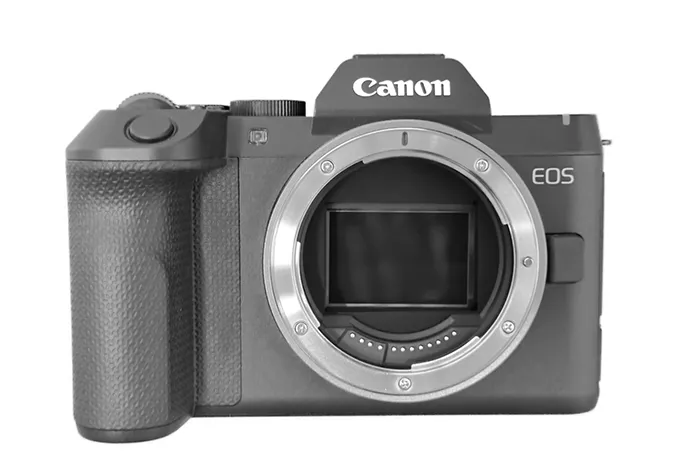
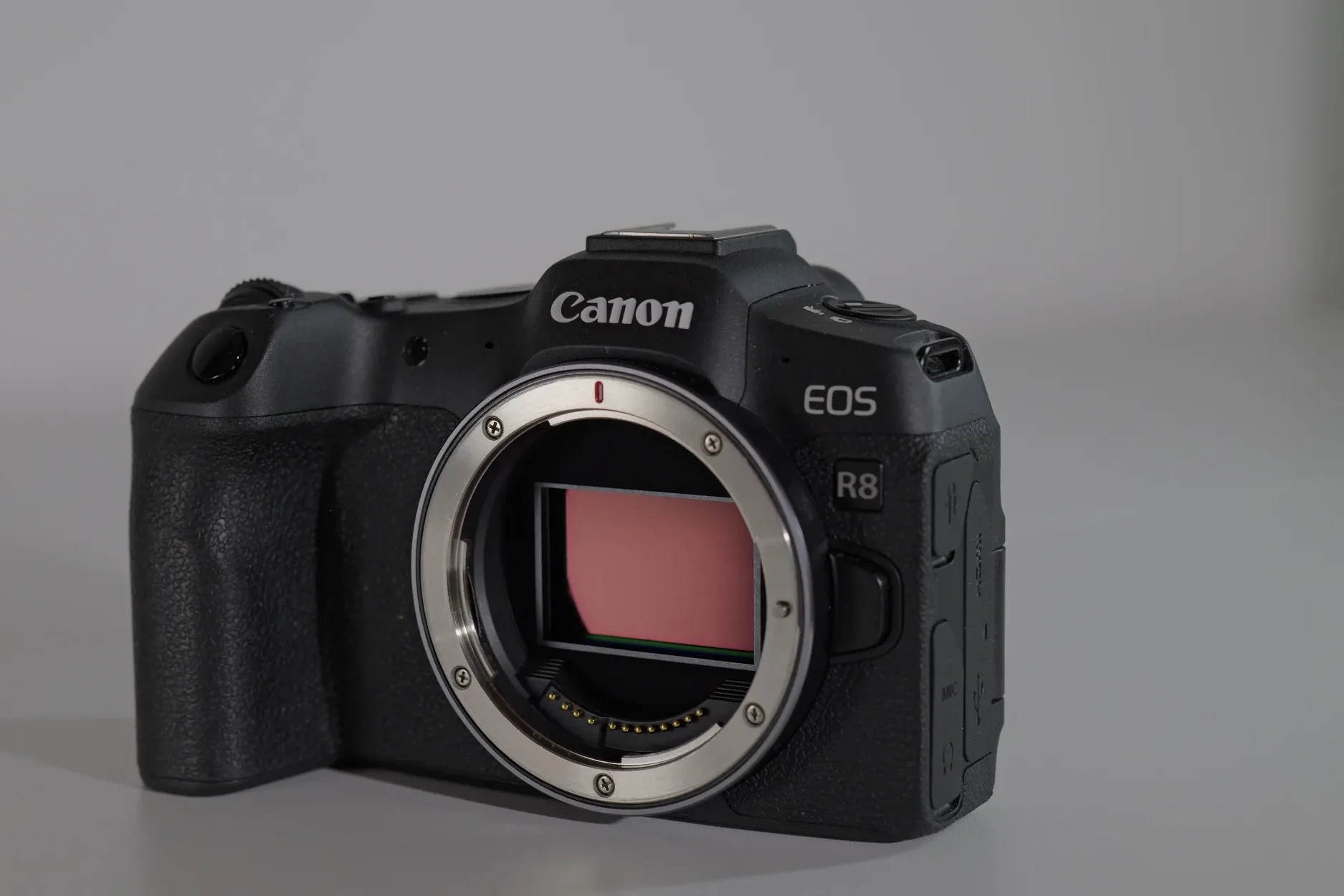
The R6II > R8 pattern was not repeated
The Canon R8 came out six months after the Canon R6 Mark II was announced. It was a striped down bare bones version of the Canon R6II with most of the internals, most of the specs in a slimmed down body. So it had smaller battery, it had no IBIS and the body was under 500 grams. When the Canon R6 Mark III came out I was expecting (or hoping) a similar succession pattern for them to release a stripped down version of the R6 Mark 3 in a slimmed down body, perhaps without the IBIS and hopefully with a better battery, than the one that is present in the Canon EOS R8. As we have seen, this is not the case it is rather a improved version of the current R8, with some additional features, in a new modern design.
And what has remained the same
What is new and what stayed the same. So let’s start with what is the same. Starting with the sensor. It has the same 24.2 megapixel CMOS full frame sensor that we find in the R8. It has the same video specifications, 4k up to 60 frames per second down sampled from 6k, full HD 180 frames per second same as R8. Sadly it also has the same battery. So the EP-L7 battery which was one of the main issues with (still is) with the R8.
Most of the improvements seem to be on the photo side of this camera. It has the same photo specs, same half a second pre-shooting. It has the same frame rate, same photo rates. It has the same DIGIC X processor that is found in the R8, R6II and R6III, and the same tilting screen. The first thing which is important is the addition of IBIS. They added IBIS to this camera which was the second complaint that most users of the R8 had that it had no IBIS and it had bad stabilization both in video as well as in photo. In a lesser extent they added also a joystick on the backside which was something that was missing is missing on the R8. There were speculations of it being in a new design, a retro design. But it seems that the design has changed to a more Sony like design. A more boxed flat top design instead of the familiar rounded Canon classic touch. We also get a lot of new software features, deep learning AI features, background de-focus features that enhance the background blur and the ability to create 3D versions of 2D images. An interesting addition is the new looks similar to the Lumix LUTS or Fujifilm recipes , color presets for your JPEGs/video that deliver looks that don’t need editing. And other features that I will list below. So is it worth it to upgrade from the R8 to the R R8 Mark II? In my opinion no, particularly if you are a content creator vlogger.
which version fits your content?|
WHAT MATTERS FOR CONTENT |
Canon EOS R8 Mark II |
CANON R8 |
|---|---|---|
|
Autofocus improvement |
Yes, new subject detection modes |
Was always smooth and reliable |
|
Battery Life Improvement |
No, same battery |
Battery longevity was a drawback |
|
Overheating improvement |
No, still overheats at longer/higher FR |
Overheating issues at 4k 60p |
|
In-body stabilization |
Yes, IBIS + E-stabilization |
No, only electronic stabilization |
|
Video codecs |
XF-AVC & HEVC (All-Intra option) |
XF-HEVC IPB (H.264/H.265) harder to edit |
What has changed in the R8II
It has the same same specs video specs as the all right, we were hoping for first of all the sensor from the R6 Mark 3 which is a 32 megapixel sensor. Instead we got the old sensor that would have led to them having to change to a bigger battery, but this also didn’t happen which is it has the same Battery as the R8, the small too small EPL7 battery.
An important feature that has been added in the is the ability to shoot in the XF-AVC 10 bit format. The Canaon R8 has only the XF-HVEC video formats which is very tasking on the computer when editing these files. The Canon R50V had these options, but I don’t think we will see them in the Canon R8 any time soon via a firmware update. It would be great ot have these codecs but Canon isn’t known for updating their older models with new features (as is Lumix)
And in regards to video specs it hasn’t changed much. Also the autofocus and all the other features were really good in the R8 and it does have an additional animal subject detection which has not been defined if it’s for birds or insects or any specific other animal groups which I think these two are the only ones.
Canon R8II vs Canon R8 comparison chart
| Camera | Canon EOS R8 Mark II | Canon EOS R8 |
| Sensor type | Full frame | Full frame |
| No. of effective pixels | 24.20 megapixels | 24.20 megapixels |
| Rear joystick | Yes | No |
| IBIS | Yes 7.5 stops | No |
| Color filters/LUTS | Downloadable color filters + luts | Older color filters |
| Focus type | Dual Pixel CMOS AF II (updated) | Dual Pixel CMOS AF II |
| Subject detection | Human / Animal / Vehicles / Birds + Face registration, deep learning AI | Human / Animal / Vehicles |
| Mechanical shutter | No | No |
| Max burst rate | 40fps Electronic Shutter, 1/16000 Max Shutter Speed | 40fps Electronic Shutter, 1/16000 Max Shutter Speed |
| Video resolution | 4k 60p (Oversampled 6k), FHD 180p | 4k 60p (Oversampled 6k), FHD 180p |
| Webcam streaming | UVC/UAC compatibility | UVC/UAC compatibility |
| Codecs/Log profile | XF-AVC & HEVC (All-Intra option) / C-Log3 | XF-HEVC only IPB (H.264/H.265) / C-Log3 |
| Interface | USB Type-C, HDMI micro (Type D) | USB Type-C, HDMI micro (Type D) |
| Viewfinder | 2.36 million dots OLED EVF up to 120 fps | 2.36 million dots OLED EVF up to 120 fps |
| Slow and fast mode | Yes | No |
| Rear monitor | 3.0” 1.62M dots vari-angle LCD touchscreen | 3.0” 1.62M dots vari-angle LCD touchscreen |
| Dimensions | 131.5 x 90 x 80 mm | 126 x 73.9 x 46.7 mm |
| Card slot | 1x UHS-II on the side | 1x UHS-II bottom battery compartment |
| Battery | LP-E17 | LP-E17 |
| Battery Life stills | 440 frames (economy), 330 (normal) | 470 frames (normal) |
| Battery Life movie | 6.2k 30p 45 min, 4k 30p 50 min, FHD 60p 45 min, FHD 120p 50 min | 4k 60p 50 min, FHD 30p 60 min |
| Weight | 500g (battery + memory card) | 486g (battery + memory card) |
| Price | €1,880 | $1,349 (current new) |
Two major issues of the R8 have not been addressed
So this new camera which is supposed to be announced on the 15th of September will not in my opinion be very popular as it doesn’t as it is photo first in the majority of the features that it has changed from the R8 to the mark to the R8 mark two, The IBIS has been included into this camera. But the other main features, the main issues were the low battery life, the small battery and of course the overheating in higher frame rates. And in general the R8 was known not to be particularly good at how longer takes as it did overheat or does overheat.
Pattern, when the R8 was just was a slimmed down version of the R6, we were expecting a slim down version of the R6 Mark III. So with a higher megapixel sensor and with all the things that came with this new sensor such as Clog2 which is also missing here and other important upgrades that are missing in this new Canon EOS R8 Mark II. So overall it is not an exciting new announcement or not as exciting as it could have been. It is we will have to see how the camera performs in the real world, particularly in video modes.
It is meant to be an entry level full frame camera (there are rumors of a R9 as the new entry level for FF Canon cameras). What about the competition? Well, as I mentioned, you can get in the similar price range you can get an used Canon EOS R6 Mark II which is basically the same without some of the new programmable features and the Luts, but has a better battery, dual card slots and more customizable options.
If we look at the competition, we can see that the Nikon Z5 II is at a lower price and has similar specs; it does have two SD cards (only in photo mode), 12 bit N-RAW but also cropped 4K 60p, a rear joystick, and a bright 3000 nits evf.
The other interesting competitor is lumix with the S5 Mark II which also has a cropped 4k 60p or has many other video features such as open gate 6k, open gate 3.8k, open gate MP4-lite Luts, Hybrid Zoom and so on. You can also get on the second hand market the newer version of the S5 II which is the S1 Mark 2E, around 1900 US dollars. And this camera has substantially better video features as well as photo features. It also does have a 1.5 times crop in 4K60 but you can get a 2.4 to 1 (CinemaScope) version of this in full frame. So the competition out there is expansive, and we must metion one of the main issues of the Canon full frame line – the lack of third party lenses, the lack of budget lenses. You are limited only to Canon RF or EF lenses with an adapter. So this issue is still is still a negative in regards to Canon and how other companies such as Nikon or Lumix are able to have many more, a selection of many more lenses, even more with an adapter. It.
|
Beginner |
Canon EOS R8 – cheaper, great deals on second hand market, can invest into lenses with the leftover funds |
|---|---|
|
Photography |
Canon EOS R8 Mark II – Additional beginner photography features |
|
Filming b-roll outside |
Canon EOS R8 Mark II– IBIS stabilizes b-roll footage more than e-stabilization |
|
Professional |
Canon EOS R6 Mark II – IBIS, bigger battery, dual card slot, similar price to the R8ii (used) |
|
Tightest budget |
Canon R50V – great beginner APS-C content creator camera |
|
Budget option |
Canon R8 – best choice with most of the important needed features available |
|---|
Is the Canon R8II worth getting?
I think this release from Canon will be a very popular camera, due to its size, new exciting features and IBIS. It will be a particularly attractive option for photographers as it offers a great photographic experience, with its top notch autofocus, rear joystick and dedicated side SD card door. It will start shipping in the second half of October 2026 along with the new extension grip ($99) and the Speedlite EL-5 II ($379).
The increased price of $1,899 or €1,879 is very steep compared to the original one and might be a determining factor of many creators in getting this camera – for this price you can get a second hand Canon R6 mark 2 which is better in most in most aspects particularly it has a bigger battery, dual card slots, it has IBIS, it has the same sensor. But it is bigger and heavier. The Canon R8 is still under 500 grams which was one of the main selling points of the R8 being the lightest full frame camera. The weight, handling and button layout are important things of course for a content creators, but the addition of a bigger battery would have been worth the extra weight due to the abysmal low level of the battery life of the R8 battery which was designed for APS-C models.
related content